
Feature Photo Credit: The Junior Age
I carry memories of October afternoons when Black History Month felt like a soft, quiet echo of conversations growing up: voices that felt peripheral, voices that needed louder amplification. Over time, I’ve come to believe it’s not just about remembering the past, it’s about standing loudly in the present, uplifting those making art, business, and culture today. This year, I want to celebrate not just Black history, but Black lived experience in the UK: the designers, the makers, the creators who are crafting vibrant futures right now.
A BRIEF HISTORY: WHY WE CELEBRATE BLACK HISTORY MONTH IN THE UK
Black History Month in the UK began in 1987, initiated by Akyaaba Addai-Sebo at the Greater London Council, and officially recognised by schools soon thereafter. Like its US counterpart, October was chosen to coincide with the end of the Atlantic slave trade (in the UK) and the birth month of both Martin Luther King Jr. and Frederick Douglass in the U.S., though the connections are less direct here. The aim was to highlight and acknowledge Black British history, often overlooked in mainstream curricula, and to create space for Black voices, stories, contributions in politics, art, science, culture, and beyond.
Honouring the Past, Celebrating the Present
Over decades, the tone has shifted: from educational exhibits and “heroes of the past” to a fuller narrative, one that honours heritage and spotlights contemporary Black excellence. To relegate Black history only to the past is erasure. Black history is alive, unfolding in current generations. And if you want to learn more about the history of this celebration and how it came to be such an integral part of our calendars, I wrote an in-depth article about it last year.
Related – Celebrating Black History Month.

HOW WE CAN SHOW SUPPORT (BECAUSE IT CAN’T ALL BE SYMBOLIC)
Honouring Black creativity in 2025 means backing it with actions: investing, amplifying, collaborating, and buying intentionally. Below are creatives, brands, and initiatives in the UK I deeply admire — I hope you’ll explore them too.
Ahluwalia
London-based brand founded by Priya Ahluwalia (Indian–Nigerian heritage). She’s one of those creators who marries identity, sustainability, and art with intention. Ahluwalia is renowned for using deadstock textiles and surplus fabrics in her collections, crafting pieces that speak to diasporic identity and environmental mindfulness.
What I love: her work isn’t just fashion, it’s a dialogue. She doesn’t separate heritage from design; each piece is a statement.
Wales Bonner
Grace Wales Bonner’s flagship label stands at the intersection of Afro-Atlantic sensibility and refined tailoring. Born and raised in South London, Grace’s work often reflects Black British cultural history, music, literature, and identity.
What I love: her collections feel rooted and visionary at once. The elegance, the narrative; it’s bold, thoughtful, and unmistakably hers.

Tolu Coker
British–Nigerian designer Tolu Coker is based in London. Her label launched in 2018 and quickly caught attention for combining elegant tailoring with expressive prints and texture. Vogue UK includes her among “Black-owned fashion brands to fall in love with.”
What I love: she blends structure and softness. There is artistry in her seams, and it’s a joy to see her name grow in UK fashion circles.
Painted by Esther (Ngozi Edeme)
While not strictly a fashion brand, I want to lift up Painted by Esther, a UK-based makeup artist (original name Ngozi Edeme) who has been instrumental in elevating Black beauty in media and editorial work.
What I love: her craft is more than aesthetic, she brings dignity and brilliance to darker skin tones in spaces that often misrepresent them. Her mastery of colour and tone is a lesson in visibility. Try giving her a follow on Instagram.

Kai Collective
Launched by Fisayo Longe in 2016 and based in London, Kai Collective is known for its vibrant prints, clever fabric work, and confident dresses and shirts. Their collection often uses standout patterns like their “Gaia” print: it’s bold, warm and celebratory.
What I love: They make prints feel like storytelling. Wearing their pieces feels joyful. There’s an unapologetic embrace of femininity, strength and colour.

Black Butter Records
A London-based record label founded in 2010, Black Butter has become a tastemaker hub for dance, grime, electronic and Black British music more widely.
What I love: they’ve helped launch artists who fuse genres and defy categorization. Their commitment to the UK music scene is both cultural and entrepreneurial.
Nubian Skin
Founded by Ade Hassan in the UK, Nubian Skin makes lingerie basics in every skin tone. They wanted to fill that gap of nude underwear options that have often left out many tones. Nubian Skin finally provides inclusive foundations that match a broader range.
What I love: They show how inclusivity in design can make people feel seen. Something as everyday (and intimate) as underwear, when made thoughtfully, sends such a strong message of care and belonging.

Farai London
Founded by Mary-Ann Msengi and UK-based, Farai London specialises in high-impact fashion. That means “It Girl” outfits, striking dresses and statement pieces. Think cut-out forms, bold shapes, confident silhouettes. Their pieces have been worn by celebrities and featured at upscale retailers like Selfridges.
What I love: They show that glamour and confidence can come from homegrown designers rooted in Black UK experience. Their pieces are showstopper statements, perfect if you want fashion that feels like power.

Corteiz (CRTZ)
A streetwear brand founded in London in 2017 by British-Nigerian entrepreneur Clint “Clint 419” Ogbenna. Corteiz is known for bold, rebellious designs; their Alcatraz-logo tees, crewnecks, tracksuits, bags and accessories have a cult following. They use guerrilla marketing and limited releases, creating high demand as soon as they drop.
What I love: Their work isn’t just fashion, it’s attitude. They blend strong identity, street culture and community. I respect how they challenge norms, make something memorable out of minimalism + message, and stay true to roots rather than chasing trends

Afrocenchix
A UK-based natural and organic haircare brand, where science/chemistry makes up a big part of their product development. Africenchix craft hair products – shampoos, conditioners, hair oils etc – using organic ingredients, often fair-trade shea butter etc. Their formulas are focused on natural textures, healthy hair, less chemical load.
What I love: They combine culture, beauty, science, and integrity. They respect natural hair communities and offer alternatives that feel nourishing rather than damaging.

MMRMS Studio
MMRMS Studio, founded by creative director Thomas Harvey, is influenced by dancehall culture and East London’s queer club scene. The brand has developed a distinctive handwriting of swooping cut-outs, sharp tailoring and high-voltage colourways.
What I love is that for MMRMS Studio, diversity and representation are not seasonal themes but core principles that drive its creative identity.

MDM Flow
MDM Flow, founded by Florence Adepoju, is a beauty brand with a strong focus on makeup products (lipstick, etc.) that work for a wide range of skin tones, especially those often underserved in “standard” ranges.
What I love: They address something crucial and often overlooked: makeup that actually matches and flatters darker skin tones. It’s more than beauty; it’s inclusion, dignity and representation.
Lapp The Brand
Founded by model Leomie Anderson in London, Lapp The Brand is an athleisure line with a message: empowerment, confidence and positivity, mixing comfort and style in ways that feel modern and purposeful.
What I love: They make everyday wear feel like a stance. Wearing something comfortable but conscious of identity and message is powerful.

Talawa Theatre Company
Founded in 1986 in London, Talawa Theatre Company is the UK’s primary Black British theatre company. They produce plays by Black British writers (and those from Caribbean/African diaspora), reinterpret classics, support Black actors, directors etc. Their work is both artistic and political.
What I love: The way art and theatre can shift perception, challenge society, and create empathy is big. Talawa does this with consistency, creativity and rootedness.

National Black Arts Alliance (NBAA)
National Black Arts Alliance (NBAA) is a UK-wide organisation of artists and cultural practitioners, who have built a national network that supports Black artists across all art forms: visual arts, performance, digital art etc. They offer events, training, advocacy and help amplify Black creativity.
What I love: Because systemic change needs both individual brilliance and organised community effort. NBAA fills a gap; helping voices get heard, talent develop, and exposure increase.
Black Lives in Music (BLiM)
Black Lives in Music (BLiM), founded around 2020, fights for equal access for Black, Asian and ethnically diverse people in the music industry, whether in learning instruments, entering conservatoires, performing, or being recognised. They address discrimination and opportunity gaps.
What I love: Music is so fundamental to culture, identity and justice. BLiM doesn’t just amplify sound; they fight for the structures that allow voices to exist and thrive.
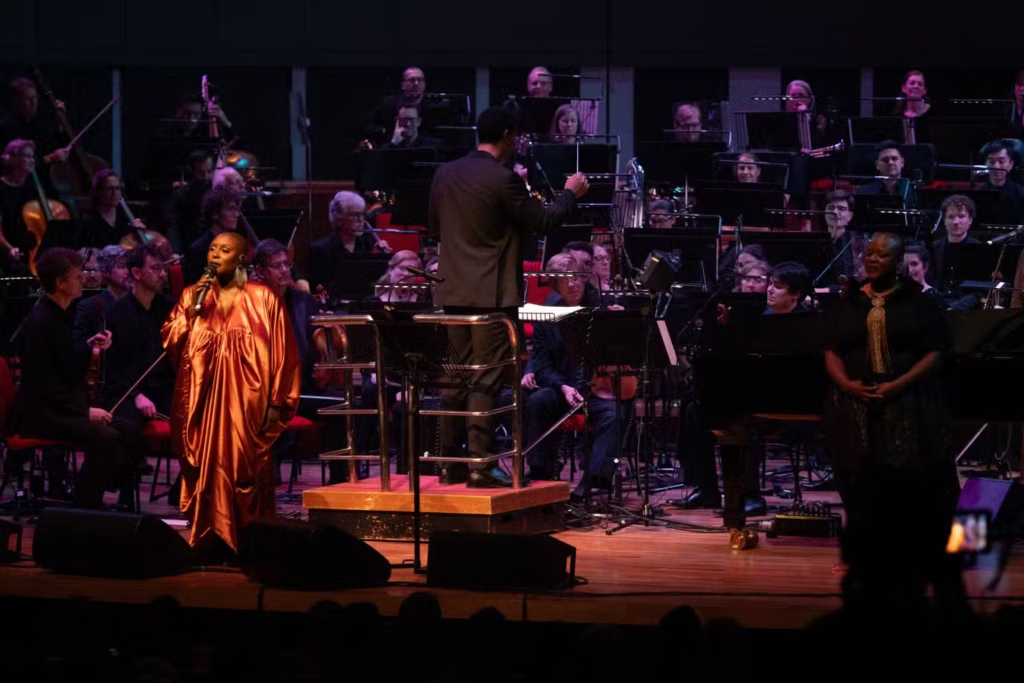
Kwanzaa Collective UK
Based in Staffordshire (Stoke-on-Trent etc), Kwanzaa Collective UK is a collective of Black/Brown creatives. They provide opportunities, safe spaces, programmes in art, heritage, and wellbeing. They focus on visibility, empowerment, and collaboration.
What I love: Their approach is holistic; it’s not just making art, it’s about community, mental health, and identity. They remind me that creativity is also care.
As Black History Month reminds us, celebration and progress go hand in hand — it’s about recognising the past while uplifting the voices shaping our present and future. If you’re a Black artist, designer, or creative working in the UK, we’d love to hear from you. Get in touch to be featured in a future spotlight as we continue to champion Black creativity, culture, and enterprise all year round.