
Feature Photo Credit: Tyler Lastovich
Every November, as the air turns crisp and the earth softens with rain, something quietly hopeful begins to happen across the UK: National Tree Week. It’s the moment when communities, schools, and local groups come together with muddy hands and big intentions, planting the first trees of the winter season. It’s also the UK’s largest annual tree celebration, a time to pause and reflect on our relationship with nature and the role trees play in repairing the planet.
But over the past few years, I’ve noticed that tree planting has become something of a buzzword. “We plant a tree for every purchase,” brands claim, from fashion labels to tech companies. And while this sounds wonderful (and sometimes it truly is), not all trees are planted equally. So, this National Tree Week, I wanted to dig a little deeper into the roots of this movement, to ask what really helps, what doesn’t, and how we can each make a difference, no matter where we live.
WHY TREES MATTER MORE THAN EVER
Before we dive into hashtags and headlines, it’s essential to remember why trees are so significant, both ecologically and emotionally. Trees serve as the lungs of our planet, quietly absorbing carbon dioxide and releasing oxygen in return. They filter pollutants, stabilise soil, provide shade and cooling in our increasingly warm cities and offer food and shelter for countless species. A single mature oak can support more than 2,300 species of birds, insects, fungi, and mosses.
Moreover, trees provide something harder to quantify, peace. The serenity of walking beneath a leafy canopy, and the gentle rustle of leaves following a rain shower. Even in the busiest urban environments, a row of trees along a street transforms the atmosphere. They encourage us to slow down and remind us to take a deep breath. So, indeed, tree planting is important. However, the approach we take in this endeavour is even more crucial.

THE TRUTH BEHIND THE “ONE TREE PER PURCHASE” CLAIM
We’ve all encountered the pledges: purchase a product, and a tree gets planted somewhere in the world. It feels satisfying, almost effortless, to believe that our shopping choices can contribute to healing the planet. However, the reality is that while some organisations engage in remarkable and transparent reforestation efforts, others simply use tree planting as a superficial PR strategy, often neglecting the type of trees, where they are planted, or whether they thrive.
Poorly executed tree planting can actually damage ecosystems. For instance, replacing diverse native forests with monoculture plantations (long rows of identical fast-growing trees) or implementing “carbon offset” projects that overlook local communities and displace wildlife can have detrimental effects. On the other hand, when conducted properly, tree planting can be one of the most potent forms of regeneration available to us. The key difference lies in accountability, emphasising transparency, utilising native species, involving the community, and ensuring long-term care.

THE GOOD ONES: COMPANIES PLANTING WITH PURPOSE
Thankfully, some organisations are truly making a difference by transforming tree planting from a mere marketing strategy into authentic climate action.
The Woodland Trust (UK)
The Woodland Trust (UK) stands out as an exemplary model. They are the UK’s largest woodland conservation charity, dedicated to protecting, restoring, and expanding native woodlands across Britain. They manage thousands of hectares of ancient woodland, working to safeguard these irreplaceable habitats from development, pollution, and invasive species.
Beyond tree planting, the Trust champions long-term habitat recovery by encouraging natural regeneration, promoting wildlife connectivity, and engaging local communities through volunteer programmes and accessible nature reserves. They engage communities across the UK through volunteering and educational initiatives, and their work ensures that forests are not only grown but cared for, preserved, and enjoyed for generations.
TreeSisters
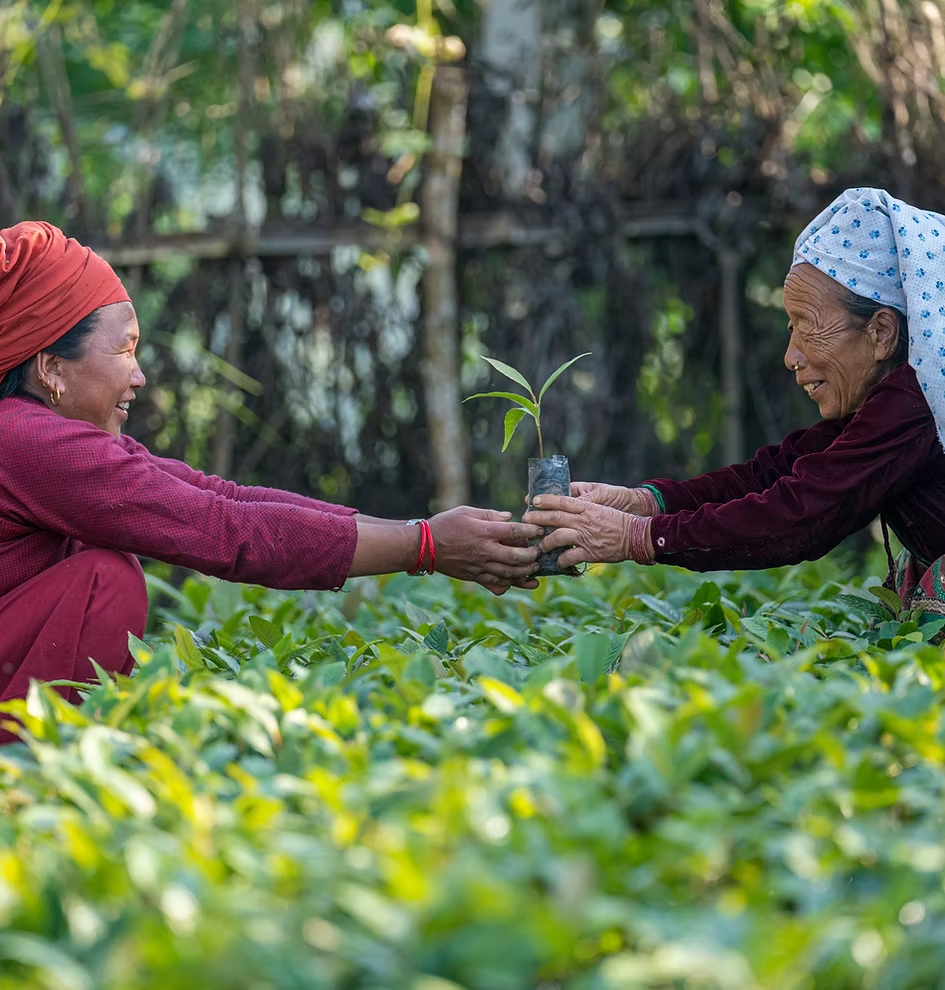
TreeSisters emphasises women-led reforestation and social empowerment, funding projects that not only heal ecosystems but also support local livelihoods. Their approach goes beyond simply putting trees in the ground; they intentionally fund projects that restore damaged ecosystems while also uplifting the communities who care for them. By centring women in leadership roles and providing resources for education and economic opportunity, TreeSisters helps create long-term environmental stewardship that is deeply rooted in local livelihoods.
Ecologi
Ecologi, a favourite among small businesses and individuals, provides complete transparency; through its user-friendly digital platform, supporters can watch their impact grow in real time—literally. Every contributor has access to a personalised “digital forest” map, where they can see the exact trees funded and follow verified updates on biodiversity gains, carbon sequestration progress, and ongoing restoration work. This open data approach builds trust and makes climate action feel accessible and measurable.

One Tree Planted
One Tree Planted takes a global view of reforestation, operating carefully across continents to ensure that every planting effort is ecologically sound. They focus exclusively on native species, which supports healthy, resilient ecosystems rather than introducing plants that could disrupt local habitats. Equally important is their collaboration with local communities: they involve residents in planning, planting, and maintenance so that the trees survive and the benefits—environmental, social, and economic—extend well into the future. Their model prioritises sustainable restoration, not just counting trees planted.
When brands collaborate with these organisations, the results are significant. So, the next time you encounter “one tree planted” on a product, take a moment to investigate who they partner with, as that’s where the real impact lies.
TURNING HASHTAGS INTO HABITS: HOW CAN WE ALL HELP?
Each year, National Tree Week serves as a poignant reminder that true change doesn’t solely arise from government commitments or flashy brand initiatives; it flourishes quietly in gardens, parks, and window boxes, one tree at a time. It’s easy to feel overwhelmed by the magnitude of the climate crisis. However, the reality is that when we plant trees, or even care for the existing ones around us, we engage in one of the most concrete and hopeful acts of regeneration.
Whether you possess vast acres of land, a cosy courtyard, or merely a bright windowsill, there are always ways to infuse more greenery into our environment. Here are some ways we can all make a difference, starting right where we are.
If you have a garden…
If you’re lucky enough to have some outdoor space, National Tree Week is the perfect time to think about how that space can give back. It’s not about filling every corner with trees, but about creating balance, a space where nature and humans can coexist.
Start by choosing native species, trees that naturally thrive in our UK climate and support local wildlife. Oaks, birches, rowans, hawthorns, and hazels are all wonderful choices. Native trees not only live longer but also feed and shelter countless species of insects, birds, and mammals. If you don’t have room for a full-grown tree, think smaller. Hedgerows are incredible carbon sinks and biodiversity corridors, offering food, nesting sites, and safe passage for wildlife. A living hedge of hawthorn, blackthorn, or dog rose can do far more for your local ecosystem than a fence ever could.
And remember: planting a tree is just the beginning. Caring for it: watering during dry spells, mulching in winter, protecting from frost and pests, is what ensures that the sapling becomes part of the landscape for decades to come.
(Tip: The Woodland Trust often gives away free tree packs for schools and community groups, making it easy to get started.)

If you live in a flat…
Even without a patch of soil, you can still take part in National Tree Week in meaningful ways. Every little bit of greenery counts, especially in cities where pollution and heat build up the fastest.
- Balconies and Patios: Choose potted trees that grow happily in containers, like olive trees, Japanese maples, or dwarf fruit trees. You can also add climbers, herbs, or pollinator-friendly plants to attract bees and butterflies.
- Windowsills and Shared Spaces: You can start small with mini lemon or fig trees, or even nurture an avocado pit or a sapling from seed: a simple, satisfying reminder that life can flourish anywhere.
- Adopt a Tree: Many councils, charities, and reforestation projects now run “adopt-a-tree” programs, where you can fund the planting and care of a tree in your name or as a gift. It’s a beautiful way to mark special occasions and give something lasting back to the planet.
- Join Local Projects: Urban areas are teeming with community initiatives that welcome volunteers: tree planting days, guerrilla gardening collectives, and local “green hub” networks that tend to city green spaces.
Because even if your roots are in concrete, your actions can still help something else take root.
If you love getting involved locally…
One of the most inspiring things about National Tree Week is that it brings people together. The simple act of planting a tree becomes a shared experience, one that bridges generations and communities.
Across the UK, hundreds of local groups will be running tree-planting events this season. Trees for Cities, The Tree Council, and Friends of the Earth often host public events where you can lend a hand, learn about native species, and meet others who care deeply about nature.
And if you don’t see an event near you, create one. Gather a few neighbours, contact your local council, and see if there’s a park, school, or roadside verge that could benefit from more trees. Even small community plantings can transform local biodiversity, reduce flooding, and make shared spaces more welcoming.
You can also get creative. I’ve seen communities plant “memory groves” to honour loved ones, or school projects where children adopt and name saplings they’ve helped to plant. These personal touches transform a simple act of planting into something deeply meaningful, a legacy that grows long after we’re gone.

Why Climate Action Requires More Than Just Planting Trees
While tree planting is impactful, it is not a comprehensive solution. To effectively address climate change, we must go beyond just planting trees; we need to protect existing ones, reduce deforestation, and adopt lifestyles that lessen our impact on the Earth. This requires us to rethink our shopping, travel, and eating habits. It calls for supporting brands that do more than simply plant trees; they should foster forests of change grounded in ethics and action. It involves getting involved at the local level and recognising that the small efforts, like balcony pots, school saplings, and hedges replacing walls, are essential for rebuilding our connection with nature.
Related – A Glimpse into the World of NGOs on World Non-Governmental Organisation Day
Planting Hope: Small Actions That Grow Into Lasting Change
During this National Tree Week, I plan to plant a small fig tree sapling I’ve nurtured in a pot since spring. It may seem insignificant, but it represents a beginning. And that is the essence of this week, not achieving perfection or large-scale efforts, but simply starting anew.
At times, it may feel like one tree won’t create an impact. However, every forest begins with a single seed, one act of care, multiplied by thousands. If each of us committed to planting just one tree each year, the UK could witness millions of new trees within a decade. This would lead to cooler cities, cleaner air, healthier soil, and flourishing wildlife. More importantly, it fosters connection among people, places, and our planet. Planting a tree is not merely about carbon offsetting; it is a message of hope. It communicates a belief in the future: I still believe in what lies ahead.