
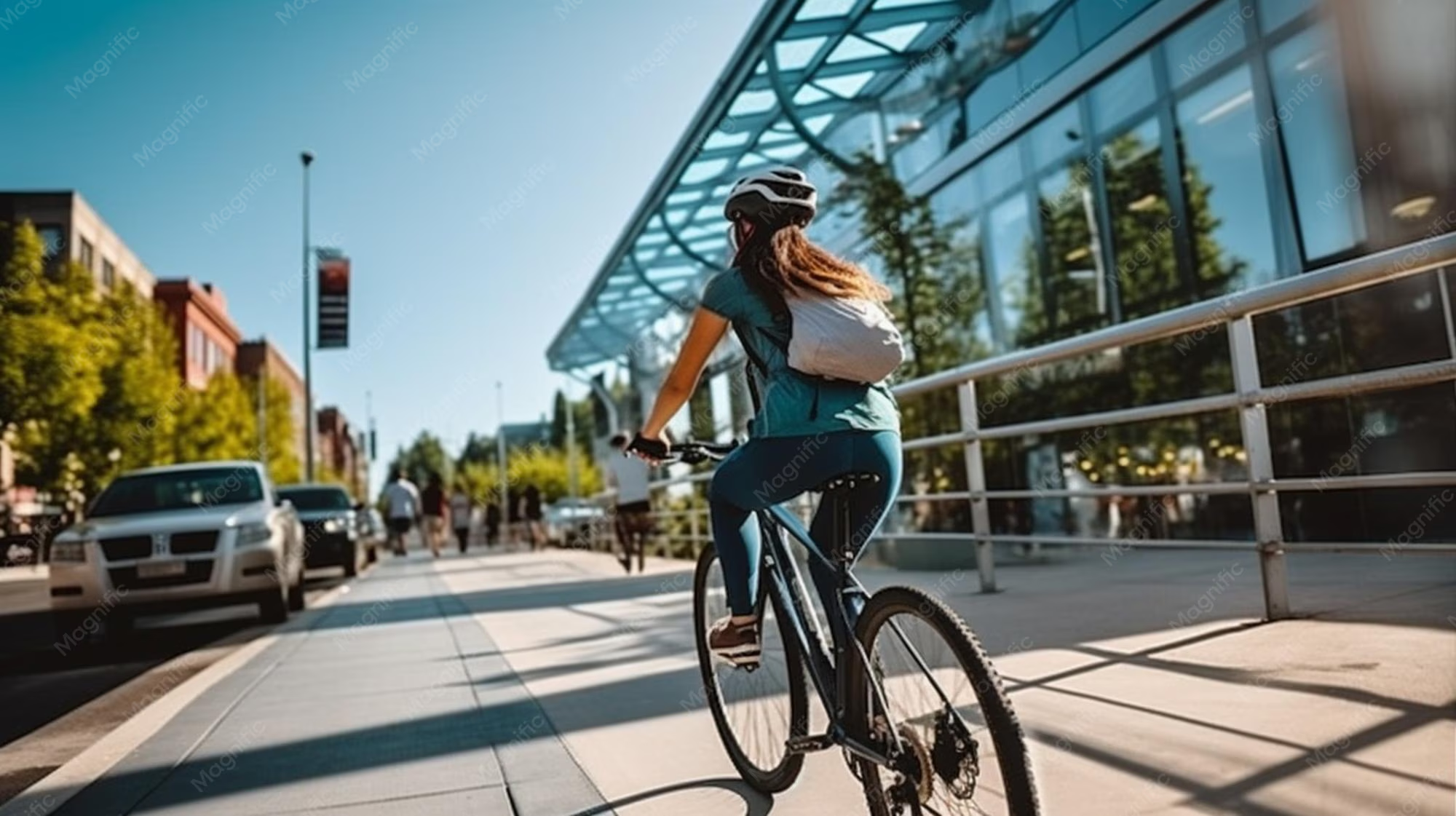
I haven’t ridden a bike much in recent years, although I did buy one while working in Vietnam. Riding there felt both exciting and intimidating because the roads were incredibly busy and chaotic. At times, the traffic seemed like organised chaos, with motorbikes, cars, and pedestrians all moving together in ways that somehow flowed despite looking overwhelming from the outside.
Even so, there was still something quietly liberating about cycling. Rather than rushing from one place to another, riding a bike allowed me to move through the environment at a slower, more thoughtful pace. Because of that, I noticed far more of what was happening around me — the streets, conversations, changing weather, and all the small details that often disappear when travelling by car or crowded public transport.
World Bicycle Day & Pedalling Towards a Better Future
A bicycle transforms your perception of distance. Journeys feel not only more physical but also more grounded. You become attuned to the inclines, the breeze, shortcuts, the earthy scents after rain, and the rhythm of neighbourhoods as you shift from one street to another. It’s a simple act, yet it completely alters your relationship with movement. This might explain why cycling has gained prominence in discussions about health, sustainability, and climate change in recent years.
Additionally, each year on June 3rd, the world celebrates World Bicycle Day, a day established by the United Nations to acknowledge the bicycle not merely as a mode of transport, but as a valuable tool for development, accessibility, wellbeing, and environmental transformation. At first glance, it may seem surprisingly humble: A bicycle. Yet, upon closer inspection, its significance grows ever more profound.
WHY WORLD BICYCLE DAY EXISTS
World Bicycle Day was officially established by the United Nations in 2018, acknowledging the bicycle as a simple, affordable, reliable, and sustainable mode of transportation that has been utilised worldwide for over two centuries.
What I find fascinating is that this day is not solely focused on cycling as a form of exercise or recreation. It encompasses the broader ideals that bicycles embody:
- Accessibility
- Independence
- Mobility
- Equality
- Sustainability
In various regions around the globe, bicycles offer access to education, healthcare, and job opportunities in ways that are often challenging or unattainable otherwise. They lessen dependency on costly transportation systems, providing more economical means for individuals to navigate their daily lives

Rethinking Urban Mobility Through Cycling
Even in urban environments where cycling is typically associated with leisure or commuting, bicycles hold significant meaning. They symbolise a movement away from excess, and they serve as a reminder that not every journey needs to depend on fuel, traffic congestion, speed, or perpetual consumption.
As discussions about climate change grow increasingly urgent, cycling is increasingly viewed not as a niche lifestyle choice but rather as a crucial aspect of rethinking how cities operate and how people move within them.
THE HEALTH BENEFITS OF CYCLING
While most of us are aware that cycling is “good for you,” we may not fully recognise the comprehensive benefits it offers.
Mental Clarity and Presence
An article from the National Center for Biotechnology Information highlights how aerobic exercise can improve cognitive function, including memory, focus, processing speed, and mental flexibility – all of which contribute to greater mental clarity. The article also notes that even a single session of moderate-intensity aerobic exercise can positively influence mood, wellbeing, and cognition.
- Stress reduction: Research shows that cycling can alleviate stress, boost mood, and enhance mental clarity. The article explains that exercise supports brain health through increased blood flow, improved neuroplasticity, and the release of brain-derived neurotrophic factor (BDNF), which is associated with cognitive function and mental wellbeing.
- Connection with nature: Part of this effect stems from physical activity itself, but the experience of being outdoors and connected to one’s environment also plays a significant role. Cycling combines movement with sensory engagement, helping reduce mental fatigue and encouraging a greater sense of calm and presence.
Cycling encourages a level of presence that is hard to achieve elsewhere:
- Engagement with surroundings: You remain attuned to the world around you – the road, the weather, and the movement of others.
- Valuable awareness: In an age dominated by screens and digital distractions, this grounded awareness is becoming ever more precious.

Physical and Emotional Well-being
Cycling positively impacts not just physical health, but also mental and emotional well-being.
- Accessibility: It is one of the most accessible forms of exercise.
- Health benefits: Cycling strengthens the cardiovascular system, enhances stamina, promotes joint mobility, and builds lower-body strength without the high impact associated with activities like running.
Integration into Daily Life
Unlike structured workouts, cycling seamlessly integrates into our daily routines:
- Natural transport: It becomes a mode of transport rather than a chore.
- Everyday activities: Whether commuting, running errands, or enjoying a leisurely ride through the park on a Sunday morning, cycling fits naturally into our lives.
This distinction is important, as it transforms the emotional connection many have with exercise:
- Less performance pressure: It feels less about performance and more about enjoyment.
- Freedom from productivity concerns: There’s less emphasis on productivity or appearance.
THE ENVIRONMENTAL BENEFITS OF CYCLING
The environmental benefits of cycling are perhaps the most widely discussed, but they’re still worth sitting with properly because they’re more significant than many of us realise.
Transport remains one of the largest contributors to greenhouse gas emissions globally, particularly in urban areas where short car journeys are incredibly common. And what’s striking is that many of those journeys could realistically be replaced with cycling: Short local trips, school runs, commutes, errands. When bicycles replace cars, emissions decrease almost immediately. But beyond carbon reduction, there are other environmental benefits too: less air pollution, less noise pollution, less congestion, and reduced pressure on urban infrastructure. Cities become quieter, cleaner, and more breathable.
And perhaps most importantly, cycling takes up remarkably little space compared to cars. Roads become less dominated by traffic. Public spaces become more human-scaled. Streets feel safer and more accessible. Some European cities have already begun embracing this more fully. In places like Copenhagen and Amsterdam, cycling has been integrated into the fabric of daily life through infrastructure designed around people rather than vehicles.
And while the UK still has work to do in this area, there’s been a visible shift over the past few years. More cycle lanes, bike-sharing schemes, cycling initiatives, and conversations around low-traffic neighbourhoods have started changing how many people think about urban transport. Not perfectly, but gradually.

CYCLING AND CLIMATE CHANGE
What interests me most about cycling in the context of climate change is how tangible it feels. Climate conversations can sometimes become so large and overwhelming that individual action feels insignificant in comparison. But cycling is one of those rare examples where personal action and systemic impact overlap quite clearly.
Every journey taken by bike instead of a car reduces emissions directly. But beyond that, increased cycling also changes public demand. It influences city planning, infrastructure investment, public transport integration, and the wider cultural expectation of what cities should prioritise. And importantly, bicycles themselves require significantly fewer resources to manufacture and maintain compared to cars. Less material extraction, less energy consumption, less waste over time.
It’s not about pretending cycling alone can solve climate change. We know it can’t. But it does represent something larger: a move towards lower-impact living that doesn’t necessarily require sacrificing quality of life. In many cases, it actually improves it.
BICYCLE RECOMMENDATIONS
One of the nicest things about cycling is that there isn’t one “right” way to do it. Different bikes suit different lives, and increasingly, there are more accessible, practical, and thoughtfully designed options available across the UK.
Brompton
For everyday commuting and city cycling, the Brompton remains one of the most recognisable British options. Their folding bicycles are particularly useful for urban living, especially for people combining cycling with trains or smaller living spaces. Compact, durable, and easy to store, they’ve become almost synonymous with city cycling in London.

Trek
Specialised
For riders looking to explore rougher paths and mixed surfaces, Specialised produces gravel bikes that are particularly well suited to UK conditions, where journeys often shift between roads, canal paths, gravel tracks, and uneven rural terrain.
In addition to bicycles, the company also sells cycling clothing, helmets, footwear, accessories, and components designed to support riders across different types of journeys and riding styles.

Volt Bikes
Electric bikes have also become increasingly popular, particularly for commuters or people wanting a gentler introduction to cycling. Volt Bikes creates e-bikes designed specifically for UK roads and weather conditions, helping make cycling more accessible for people who may feel intimidated by hills, distance, or fitness barriers.

Temple Cycles
And for something slightly more lifestyle-oriented, brands like Temple Cycles focus on beautifully designed bicycles built for slower, everyday riding rather than speed or performance. Something is refreshing about bikes designed simply to make everyday journeys feel enjoyable again. Of course, the “best” bicycle is ultimately the one that fits naturally into your life. The one you’ll actually use.

AND FINALLY....
What makes cycling particularly powerful is that it does not require perfection or radical lifestyle change. Whether it is a short commute, a weekend ride through the countryside, or replacing occasional car journeys, even small shifts towards cycling can create meaningful personal and environmental benefits over time. In that sense, the bicycle remains one of the simplest yet most effective tools for creating healthier people, cleaner cities, and more connected communities.
SUZSTAINABLE sometimes uses affiliate links, whereby if you purchase an item using a link from this site, I earn a small percentage. For more information on affiliate links please see my affiliate policy.