
Feature Photo Credit: Unsplash
Air is one of those things I rarely think about, despite depending on it every second of every day. I notice when the sky is beautifully blue or when the countryside smells fresh after rain. I also notice the difference when I leave a busy road and walk into woodland. Yet, most of the time, I simply breathe without thinking about what might be in the air around me.
Perhaps that is what makes air pollution such an unusual environmental problem. Many of the issues we discuss when we talk about sustainability are visible. We can see plastic waste on a beach, rubbish beside a road or trees disappearing from a landscape. Air pollution, however, can be much harder to see. That doesn’t make its impact any less significant. Clean air affects our health, our climate and the ecosystems we depend upon. Therefore, the International Day of Clean Air for Blue Skies, which takes place this 7th September, feels like a valuable opportunity to pay attention to something we often take for granted.
What makes our air polluted? Where does that pollution come from? How does it affect our bodies and the natural world? Most importantly, what could cleaner air mean for our everyday lives? The more I learned, the more I realised that clean air isn’t simply an environmental ambition. It’s a basic human need.
WHAT IS THE INTERNATIONAL DAY OF CLEAN AIR FOR BLUE SKIES?
The United Nations General Assembly established the International Day of Clean Air for Blue Skies in 2019. The first observance then took place on 7th September 2020. The day aims to raise awareness of air pollution while encouraging governments, businesses, communities and individuals to improve air quality.
However, I don’t think we need to view this purely as another date in the environmental calendar. Instead, 7 September gives us a reason to stop and think about something that surrounds every one of us. Air quality connects to transport, energy, agriculture, industry, climate change and public health. As a result, improving the air we breathe requires us to look at many parts of modern life together.
WHAT ACTUALLY CAUSES AIR POLLUTION?
When I think about air pollution, my mind immediately goes to a busy city road. Cars queue at traffic lights, buses move through traffic, and exhaust fumes fill the streets. Transport certainly contributes to air pollution, but the picture is much broader. Power generation, industry, agriculture, domestic heating and waste can all release pollutants into the atmosphere. Wildfires and natural processes can affect air quality too. Moreover, there isn’t one single substance called “air pollution”. Instead, the term covers several pollutants that behave differently in the atmosphere.

WHAT IS PM2.5?
One you may have seen on weather apps or air-quality forecasts is PM2.5. PM stands for particulate matter. PM2.5 describes very fine particles that measure 2.5 micrometres or less in diameter. Their tiny size is important because we can breathe them deep into our lungs. Some particles can then enter the bloodstream. Consequently, exposure to polluted air is linked to serious respiratory and cardiovascular conditions.
Other pollutants include nitrogen dioxide and ground-level ozone. Although each behaves differently, together they influence the quality of the air around us. Suddenly, air pollution feels much less abstract.

CLEAN AIR IS ALSO A HEALTH ISSUE
We often place air pollution firmly within the environmental conversation. However, it’s also a major public-health issue. The effects aren’t necessarily shared equally either.
Children and older people can face greater risks from polluted air. Where we live can influence our exposure too. A home beside a heavily trafficked road may experience very different conditions from one surrounded by quieter streets and green space.

Therefore, clean air isn’t simply about making individual lifestyle changes. The design of our towns and cities matters too: Transport systems matter, energy policy matters, housing matters, and the location of schools, roads and green spaces matters. When we look at air quality in this way, it becomes something communities create together.
HOW AIR POLLUTION AND CLIMATE CHANGE CONNECT
Air pollution and climate change are different problems, but they often share common causes. Burning fossil fuels for transport and energy releases greenhouse gases that warm the planet. At the same time, these activities can release pollutants that damage the air locally. However, this connection also gives us an opportunity.
Some solutions can address both problems at once. Cleaner energy can reduce greenhouse gas emissions while cutting certain air pollutants. Similarly, making walking, cycling and public transport easier can reduce reliance on cars. I find that surprisingly hopeful.
Environmental challenges can sometimes feel like a long list of separate problems. In reality, many solutions overlap. Cleaner transport can support cleaner air, cleaner energy can reduce emissions; meanwhile, greener neighbourhoods can support wildlife while creating more pleasant places for people to live. One change can create several benefits.

WHAT DOES AIR POLLUTION DO TO NATURE?
Humans aren’t the only ones living beneath this atmosphere. Air pollution can also damage plants, ecosystems, soil and water. Ground-level ozone, for example, can harm plant tissues and affect growth. Consequently, poor air quality can influence natural habitats and agricultural crops.
Again, the connections become difficult to ignore. Healthy ecosystems support wildlife. Agriculture depends on healthy plants and soils. In turn, our own food systems rely on those ecosystems functioning properly. This is why I’ve never found it particularly helpful to think of “the environment” as something separate from us. We live inside it.

COULD CLEANER AIR ALSO CREATE BETTER CITIES?
Cities sit at the centre of the clean-air conversation because they bring large populations and pollution sources together. However, that concentration also creates opportunities.
Imagine a city where public transport works so well that leaving the car at home feels easy. Safe cycle routes connect neighbourhoods, while quieter streets make walking more enjoyable. Cleaner buses move through the city, and more trees provide shade along pavements.
Those changes can improve air quality, but their benefits don’t stop there. People can become more active, streets can become quieter, children may gain safer journeys to school. Meanwhile, trees and green spaces can support wildlife and make neighbourhoods more pleasant during warmer weather.
Therefore, clean-air policies don’t have to feel like environmental restrictions. Done well, they can make everyday life better.

SO, WHAT CAN WE DO?
Governments, cities and businesses hold many of the biggest tools for improving air quality. Decisions about transport, energy, housing, industry and urban planning can have a far greater impact than any one person’s choices. Nevertheless, our individual actions still contribute to the wider picture, particularly when those choices are shared by communities.
Start by Paying Attention
Perhaps the most important thing we can do is simply become more aware of the air around us.
We notice when the sky is blue, when the countryside smells fresh after rain or when the air feels different after leaving a busy road. Paying attention to those differences reminds us that clean air isn’t something we should take for granted.
We might not be able to solve air pollution through individual choices alone, but our choices, our voices and the decisions we make as communities all form part of the bigger picture. Cleaner air is ultimately something we create together.
Choose Cleaner Ways to Travel
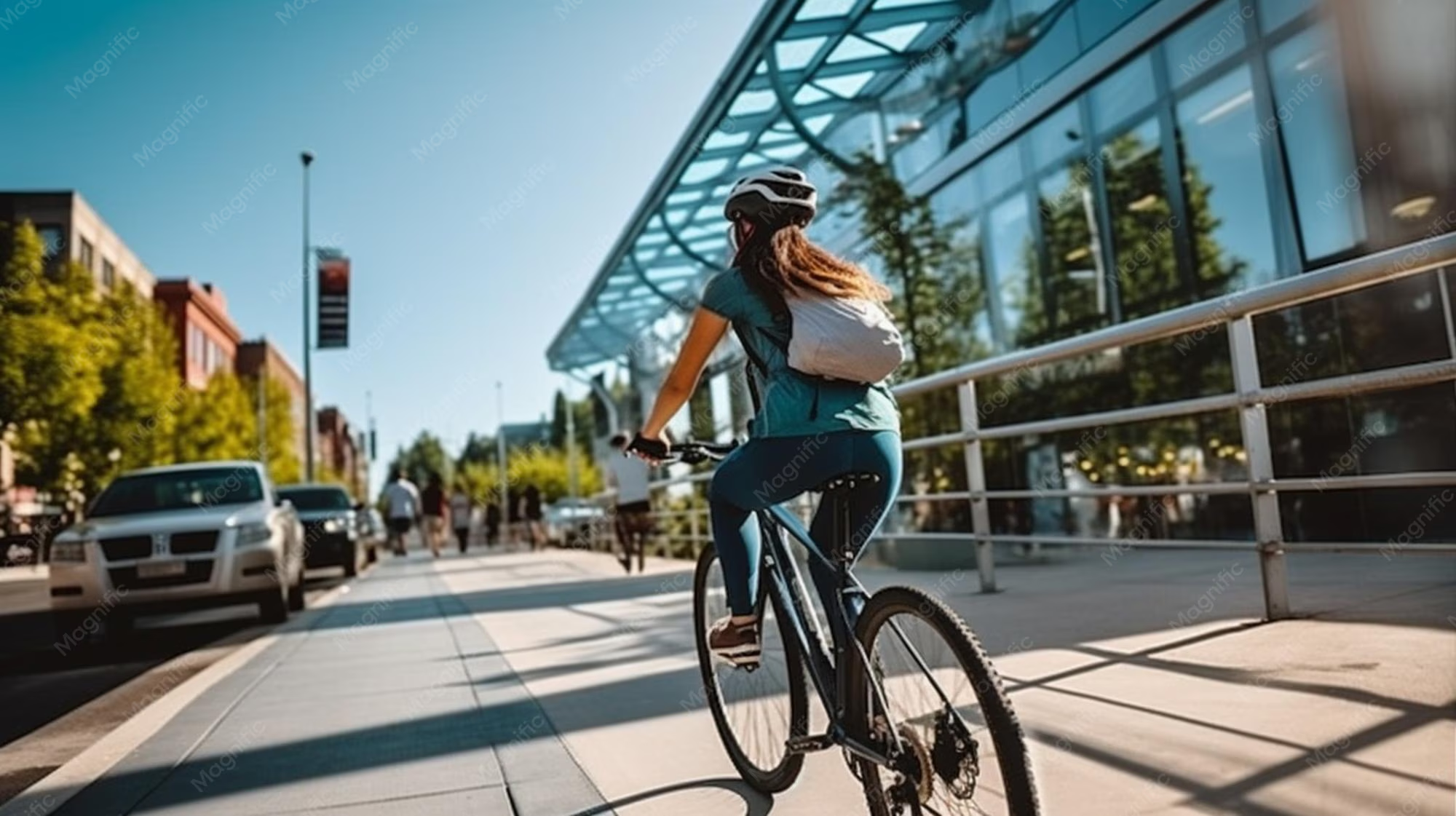
Where possible, we can walk or cycle shorter journeys rather than automatically reaching for the car. For longer journeys, using public transport or sharing journeys can help reduce the number of vehicles on the road and the pollution associated with them.
These choices don’t have to mean completely changing how we travel. Even replacing a few short car journeys each week with walking, cycling or public transport can be a small step towards cleaner air. Making these options easier and safer, however, requires investment in reliable public transport, cycle routes and pedestrian-friendly streets.
Related – Why cycling might be one of the simplest ways to change a city – SUZSTAINABLE
Reduce Energy Use at Home
Our homes also have a role to play. Reducing unnecessary energy use can help lower demand for energy generation and, where energy comes from fossil fuels, reduce associated emissions.
Simple actions such as switching off lights and appliances when they aren’t needed, avoiding unnecessary heating and improving energy efficiency can all contribute. Individually, these actions may seem small, but collectively they can make a difference.

Think About Waste
What happens to our waste can also affect air quality. Reducing the amount of waste we create in the first place is therefore important, as is reusing and recycling where possible.
Perhaps most importantly, we should avoid burning household or garden waste. Burning materials can release pollutants directly into the air, affecting both the person doing the burning and people living nearby. Keeping waste out of the air is a simple but important part of protecting local air quality.
Related – REFILL NOT LANDFILL – The Growing Global Landfill Crisis – SUZSTAINABLE

Support Greener Neighbourhoods
Individual action doesn’t need to stop with our own habits. We can also become involved in the decisions that shape the places where we live.
Supporting safer walking and cycling infrastructure, better public transport and more green spaces can help create neighbourhoods where cleaner choices are easier. Trees and green spaces can also make streets more pleasant while supporting wildlife and helping communities adapt to warmer weather.
Related – Allotments & Biodiversity – SUZSTAINABLE

Take an Interest in Local Air Quality
We can also pay more attention to what is happening in our own communities. Air pollution can vary considerably between different areas, particularly around busy roads and other pollution sources.
Checking local air-quality information, taking part in community discussions and asking what local authorities are doing to reduce pollution can help keep the issue visible. Change is more likely when people understand the problem and ask for cleaner, healthier places to live.