

Feature Photo Credit: World Health Organisation
When we talk about food safety, most of us think about contamination.
We think about food poisoning, bacteria, hygiene standards, refrigeration, expiry dates, and making sure the food we eat doesn’t make us immediately ill. These are undoubtedly important. In fact, the systems designed to prevent foodborne illness are among the greatest public health achievements of modern society.
But increasingly, I find myself wondering whether our understanding of food safety has become too narrow.
While food safety has traditionally focused on protecting us from acute harm, many of today’s concerns are less visible and far more complex. They are not necessarily about whether food will make us sick tomorrow. For many people today, concerns about food extend far beyond contamination. Questions are being asked about ultra-processed foods, artificial additives, preservatives, flavourings, pesticide residues, hormone-treated livestock, and chemically altered ingredients over years or even decades and the growing industrialisation of food production.
The issue is no longer simply whether food is free from harmful bacteria, but whether the way food is produced, processed, and altered is supporting long-term human health.
World Food Safety Day
This is what makes World Food Safety Day, celebrated annually on 7 June, particularly relevant. Established to raise awareness about the importance of safe food systems, it provides an opportunity not only to recognise the extensive systems that protect us from foodborne illness, but also to reflect on the broader relationship between modern food production and human wellbeing.
The 2026 theme, “From Burden to Solutions – Safe Food Everywhere,” focuses on using science, data, and evidence-based practices to reduce foodborne disease and strengthen food safety systems across the entire food chain. While much of the conversation centres on preventing contamination and illness, the day also presents an opportunity to reflect on the broader relationship between food systems, food quality, and long-term human health.
The Systems Shaping the Food We Eat
Behind every meal we eat exists an enormous network of regulations, inspections, scientific testing, agricultural practices, manufacturing processes, supply chains, and commercial decisions. Many of these systems have dramatically improved food accessibility, extended shelf life, and reduced risks that previous generations routinely faced.
Food is available in greater quantities than ever before, travels further than ever before, and can remain on shelves for longer than previous generations could have imagined. Achieving this often requires extensive processing, additives, preservatives, flavour enhancers, colourings, and increasingly complex manufacturing techniques.
modern food systems present a different set of questions

None of this automatically makes food unsafe. Many of these innovations have improved food security, reduced waste, and made nutrition more accessible. However, growing research into ultra-processed foods, environmental contaminants, antibiotic resistance, and the cumulative effects of certain ingredients is encouraging a wider conversation about what safety should mean in the twenty-first century.
So should our definition of food safety also consider the long-term impact of processing, additives, production methods, and the overall quality of the food we eat?
Perhaps this raises a broader question. In a world where food is increasingly engineered for convenience, often disconnected from the way humans have traditionally grown, prepared, and consumed it, what does safe food actually mean?
THE TRADITIONAL VIEW OF FOOD SAFETY
Historically, food safety has been focused on preventing contamination and disease.
The systems supporting this are genuinely remarkable. Farmers, manufacturers, transport companies, retailers, regulators, scientists, restaurant staff, and food inspectors all play a role in ensuring that food can move safely through increasingly complex supply chains.
These systems help prevent:
- Bacterial contamination
- Foodborne illnesses
- Cross-contamination during preparation
- Unsafe storage conditions
- Spoilage during transport
- Water-borne contaminants
For most people living in developed countries, these protections have become so effective that they are largely invisible.
We rarely think about the infrastructure required to transport fresh produce across continents, maintain cold chains, monitor food quality, and enforce safety standards. Yet these systems underpin every meal we eat. There is no question that they matter.
The World Health Organisation estimates that hundreds of millions of people suffer from foodborne illness every year, demonstrating that food safety remains a critical public health issue worldwide. But perhaps food safety can no longer be viewed solely through the lens of contamination.

WHY FOOD SAFETY REMAINS A GLOBAL PRIORITY
While discussions around food quality, processing, and long-term health continue to evolve, traditional food safety remains one of the world’s most significant public health challenges.
Foodborne illnesses occur when bacteria, viruses, parasites, toxins, or chemical contaminants enter the food chain. Common pathogens such as Salmonella, E. coli, Campylobacter, and Listeria are frequently linked to contaminated food, poor hygiene, unsafe handling practices, inadequate cooking, or improper storage. Viruses including norovirus and hepatitis A can spread through contaminated food and water, while parasitic infections continue to pose a significant risk in many regions of the world. Together, biological hazards account for the vast majority of foodborne illnesses globally.
Chemical Hazards and Emerging Food Safety Challenges
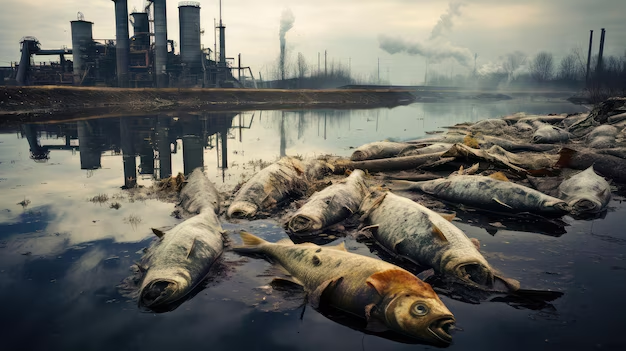
Food safety extends beyond bacteria and viruses. Chemical contaminants—including naturally occurring toxins, heavy metals, environmental pollutants, pesticide residues, and industrial chemicals—can also pose serious risks to human health. While some contaminants may cause acute illness, others are linked to longer-term health effects such as developmental disorders, neurological damage, immune system disruption, cardiovascular disease, and certain cancers. Recent WHO research estimates suggest that chemical hazards account for a disproportionate share of food-related deaths worldwide, with substances such as lead, inorganic arsenic, and methylmercury among the most concerning contaminants.
As food supply chains become increasingly global and consumer demand for year-round availability and convenience continues to grow, ensuring food safety is becoming more complex. Climate change, urbanisation, changing consumer behaviours, antimicrobial resistance, and longer supply chains are creating new challenges for producers, regulators, and public health authorities.
This is why World Food Safety Day remains so important. It serves as a reminder that food safety is not solely the responsibility of governments or food manufacturers. Protecting public health requires a shared commitment across the entire food chain—from farm to fork—to ensure that the food people consume is safe, nutritious, and trustworthy.
THE RISE OF CONVENIENCE FOOD
One of the defining characteristics of modern food systems is convenience. Food is now available almost everywhere, at almost any time. Products last longer, travel further, require less preparation, and can be consumed more quickly than ever before.
This convenience has brought undeniable benefits. Food has become more accessible, affordable, and available throughout the year. Many people depend on these systems. However, convenience often comes with trade-offs. To extend shelf life, improve texture, maintain consistency, enhance flavour, and maximise profitability, foods are frequently subjected to extensive processing and reformulation.

FOOD SAFETY, HEALTH AND THE CONVENIENCE CULTURE
To extend shelf life, maintain consistency, improve texture, enhance flavour, and maximise profitability, many foods undergo extensive processing and reformulation. Ingredients that once closely resembled their natural form can become products containing dozens of additives, preservatives, flavourings, colourings, emulsifiers, and other ingredients that would have been unfamiliar to previous generations.
This is where the conversation about food safety begins to evolve.
Safe food is about more than avoiding contamination. It is also about nutrition, quality, and trust. Fresh, properly stored food retains its nutritional value more effectively, while clean water systems, sanitary conditions, and responsible food handling help protect communities from wider public health issues. But consumers are increasingly looking beyond these traditional measures and asking deeper questions about how food is produced, processed, and altered before it reaches their plate.
Perhaps the answer lies in expanding our understanding of what food safety means. Not replacing the essential work of preventing contamination and disease, but recognising that long-term health, nutritional integrity, ingredient transparency, and public trust are becoming equally important parts of the conversation.
THE GROWING DEBATE AROUND FOOD INGREDIENTS
Many people today are not only concerned about whether food is free from harmful pathogens, but also about the long-term health effects of additives, preservatives, flavourings, colourings, hormones, antibiotics, and highly processed ingredients that have become common throughout modern food systems.
It’s important to approach these conversations with balance. Not every additive is harmful, and regulatory bodies around the world assess food ingredients before approving them for use. The World Health Organisation notes that food additives play an important role in preserving food, improving shelf life, maintaining quality, and reducing spoilage. However, scientific research continues to examine how certain additives may affect health over time, particularly when consumed regularly as part of highly processed diets.

artificial colourings
One area receiving increasing attention is artificial colourings and preservatives. Some studies have suggested links between certain food colourings and behavioural effects in children, including increased hyperactivity in susceptible individuals. While research findings remain complex and continue to be debated, the discussion has encouraged greater scrutiny of ingredients commonly used in processed foods.

preservatives
Preservatives have also become a focus of ongoing research. They help prevent spoilage and reduce food waste, which is an important food safety benefit. At the same time, researchers are investigating whether some commonly used preservatives may have broader effects on gut health, metabolism, inflammation, and long-term disease risk when consumed in large quantities over many years.
flavour enhancers, emulsifiers, and ultra-processed food ingredients
Flavouring agents are among the most widely used food additives in modern food production. Added to modify aroma and taste, they are found in everything from soft drinks and confectionery to cereals, yoghurts, and ready meals. Some flavourings are extracted from natural sources such as plants and animals, while others are chemically synthesised to replicate naturally occurring flavours or create entirely new taste experiences.

Although these ingredients are approved for use and play an important role in modern food production, emerging research is exploring how certain additives may interact with the gut microbiome, which influences digestion, immunity, metabolism, and overall health. While much of this research is still evolving, it reflects a growing shift in how we think about food safety—not simply as protection from immediate illness, but as a broader consideration of how the foods we consume may affect long-term wellbeing.
While these ingredients play an important role in making processed foods more appealing and consistent, they also form part of a wider conversation about how modern foods are engineered for convenience and consumer preference.

emulsifiers, and ultra-processed food ingredients
Emulsifiers, in particular, are widely used in ultra-processed foods to prevent ingredients from separating and to create the smooth textures consumers expect in products such as ice cream, packaged bread, sauces, confectionery, and ready meals.
While food safety authorities consider approved emulsifiers safe for consumption at regulated levels, some emerging research has explored potential links between certain emulsifiers, changes in the gut microbiome, inflammation, and metabolic health. However, the evidence remains an active area of scientific investigation, and researchers continue to debate the extent to which specific ingredients, overall dietary patterns, or broader lifestyle factors contribute to observed health outcomes.
antibiotics and hormones
The use of antibiotics and hormones within food production systems has also generated discussion. Antibiotics are widely used in some agricultural systems to prevent disease and support livestock production. However, health organisations including the World Health Organisation have warned that excessive antibiotic use in food-producing animals can contribute to antimicrobial resistance, one of the most significant public health challenges facing the world today. When bacteria become resistant to treatment, infections become harder to manage and foodborne illnesses can become more dangerous.

microplastics
Packaging presents another emerging food safety issue. Scientists are increasingly studying the presence of microplastics within food and drink supplies. Although current evidence does not conclusively demonstrate that the levels detected pose a direct risk to human health, researchers continue to investigate how plastic particles enter food systems and what long-term effects they may have.
The Future of Food Safety
Perhaps what these discussions reveal is that food safety is no longer viewed solely as the prevention of contamination. Increasingly, it encompasses transparency, ingredient quality, environmental exposure, long-term health outcomes, and public trust in food systems. As scientific understanding evolves, consumers are becoming more interested in how food is produced, processed, packaged, and regulated, not out of fear, but out of a desire to make more informed choices about the food they eat every day.
Further Reading....
Food safety research is constantly evolving as scientists continue to investigate the potential health impacts of food additives, antimicrobial resistance, ultra-processed foods, and emerging contaminants. The following resources provide evidence-based information from leading public health and regulatory organisations:
- World Health Organization – Food Additives
- WHO – Antimicrobial Resistance in the Food Chain
- WHO Guidelines on Antibiotic Use in Food-Producing Animals
- FDA – Microplastics and Nanoplastics in Foods
- European Food Safety Authority – Food Colours and Child Behaviour
The WHO notes that food additives are extensively assessed for safety before approval, while also acknowledging the need for ongoing evaluation as scientific evidence develops. Research into antimicrobial resistance, food additives, ultra-processed foods, and environmental contaminants such as microplastics continues to evolve, making this one of the most active areas of modern food safety research.