
Feature Photo Credit: Soil Association
There is something about September that always makes me think differently about food. Summer is beginning to soften, the markets are full of late-season produce and suddenly apples, squash and root vegetables start appearing alongside the last tomatoes and berries. It feels like a particularly good time to notice what is growing around us and, perhaps more importantly, where our food actually comes from. September is also Organic September, an annual campaign that encourages us to learn more about organic food and farming.
However, I don’t think this needs to become another conversation about creating the perfect organic shopping basket. For me, the interesting question is much simpler. What does organic actually mean, and can understanding it help us make more thoughtful choices about our food? The thing is, whether we shop at a supermarket, visit a farmers’ market or collect vegetables directly from a local grower, becoming more connected to our food can only be a good thing.
WHAT DOES ORGANIC FOOD ACTUALLY MEAN?
The word organic appears everywhere, but it has a specific meaning when it comes to food. In the UK, producers must meet defined standards before they can legally market food as organic. Organic certification covers the way farmers grow crops, manage soil, control pests and raise animals.
Therefore, organic doesn’t simply mean “natural” or “chemical-free”. Instead, we should think of it as a whole farming system. Organic farmers build soil fertility through methods such as crop rotation, compost and manure. They avoid manufactured nitrogen fertilisers and severely restrict pesticide use. Organic livestock standards also cover areas such as diet, outdoor access, space and animal welfare.
So, when we choose an organic product, we’re not simply choosing a different carrot or carton of milk. We’re supporting a particular approach to farming.

WHY CAN ORGANIC FARMING BE MORE SUSTAINABLE?
One of the reasons organic farming interests me is its focus on the health of the whole farm. Instead of viewing soil, crops, insects and animals as separate things, organic agriculture recognises that they form part of the same ecosystem.
It starts with the soil
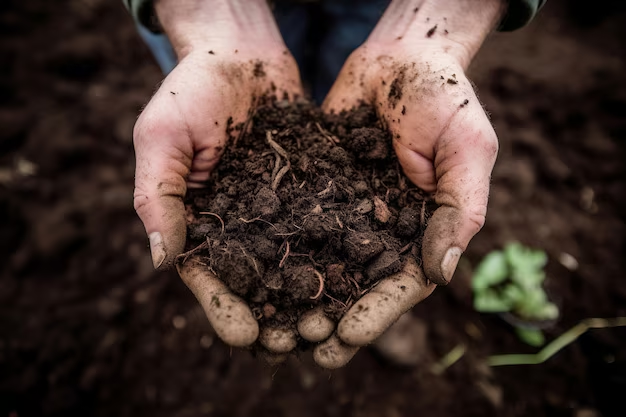
Healthy soil sits at the heart of organic farming. Rather than relying on manufactured nitrogen fertilisers, organic farmers use techniques such as crop rotation, composting and growing legumes to maintain fertility. This approach can support soil life and help maintain healthy soils over time. It also reduces reliance on synthetic fertilisers, whose production requires large amounts of energy.
If you’ve read my article on regenerative farming, some of these ideas may sound familiar. The two systems aren’t identical, but both encourage us to think about soil as something alive rather than simply somewhere to grow crops.
Related – Celebrating 10 Years of World Soil Day – SUZSTAINABLE
It makes more space for wildlife
Organic farms can also provide valuable habitats for wildlife. Reducing pesticide use allows more insects and plants to survive. Meanwhile, hedgerows, field margins and other habitats can provide food and shelter for bees, butterflies, birds and other species.
That matters because agriculture doesn’t exist separately from nature. Pollinators support many of the crops we eat, while insects, birds and microorganisms all play roles within healthy ecosystems. Therefore, the way we produce food can influence much more than what’s eventually placed on our plates.
Related – No Mow May: The Movement Asking Us To Leave Nature Alone – SUZSTAINABLE

ORGANIC DOESN'T AUTOMATICALLY MEAN LOCAL
This is where I think the conversation becomes particularly interesting. An organic product isn’t necessarily local. Equally, something grown by a farmer five miles away isn’t necessarily certified organic. Both can still have value.
Organic certification tells us something about how food was produced. Buying locally, meanwhile, can tell us much more about where it came from and who produced it. Sometimes we’re lucky enough to find both. This is why I love farmers’ markets, farm shops and independent food businesses. They give us something supermarkets can’t always provide so easily: the opportunity to have a conversation.
You can ask where the tomatoes grew. You can find out what’s in season. You can ask the farmer how they manage pests or care for their animals. A small local grower may use thoughtful, low-input or regenerative methods without holding organic certification. Therefore, I wouldn’t dismiss local food simply because it doesn’t carry an organic logo. Instead, ask questions!
ORGANIC FOODS TO LOOK OUT FOR IN UK SUPERMARKETS
Of course, most of us aren’t going to abandon supermarkets, myself included. Fortunately, choosing organic doesn’t require us to anymore. There are now plenty of organic food brands available across UK supermarkets and independent shops. So, if you want to introduce a few organic products into your usual food shop, these are some names worth looking out for.
Yeo Valley Organic
Yeo Valley Organic is probably one of the most familiar organic names in British supermarkets. The family-run business has its roots in Somerset and produces organic milk, yoghurt, butter and other dairy products. If you’re curious about organic food but don’t know where to begin, something as simple as switching your usual milk or yoghurt can be an easy starting point.

Clearspring
For organic Japanese and plant-based foods, Clearspring is another lovely brand to know. Its range includes miso, tofu, seaweed, noodles, rice products and seasonings, alongside teas and snacks.
What makes Clearspring particularly interesting is its emphasis on simple, minimally processed ingredients and traditional production methods. Many of its Japanese products are made using traditional techniques, such as naturally fermented miso and tamari, helping to preserve the flavour and character of these foods while providing versatile ingredients for everyday cooking.

Doves Farm
If you enjoy baking, Doves Farm is another name you may already recognise. The British company has a long association with organic farming and produces organic flours alongside cereals, pasta and baking ingredients. Their organic flour is an easy cupboard staple to introduce without changing the way you normally cook.

Mr Organic

If you’re looking for organic cupboard staples, Mr Organic is another brand worth keeping an eye out for in the supermarket. Its range includes passata, chopped tomatoes, pasta, beans, pulses, pesto and olive oil, making it particularly easy to incorporate into everyday meals.
I particularly like Mr Organic as an example of an easy organic swap. You don’t need to completely rethink what you cook – your usual pasta dish, chilli or baked beans can simply start with an organic ingredient instead. Its Italian tomatoes are grown on organic farms in Italy, while the brand says it avoids air freight, using road, rail and sea transport instead.
Clipper
Organic shopping isn’t limited to the food aisles either. Clipper is a familiar name in the tea aisle, with a wide selection of organic teas and herbal infusions. If you drink tea every day, choosing an organic option can be one of those small changes that is relatively easy to make without changing your routine. Clipper also demonstrates how organic choices can extend into the drinks cupboard.

Pukka
Another recognisable supermarket brand is Pukka, particularly known for its organic herbal teas.
Its colourful boxes and distinctive blends have become a familiar sight on supermarket shelves, with combinations including peppermint, chamomile, ginger, turmeric, berries and green tea. Pukka says that 100% of its products are certified organic, with ingredients sourced from certified organic farms in more than 35 countries.
What makes Pukka particularly interesting from a sustainability perspective is that its focus goes beyond simply being organic. The brand’s teas are Fair for Life certified, reflecting its approach to responsible sourcing and relationships with growers, while its tea bags are made without plastic heat-sealing and are certified home compostable. Pukka also uses FSC-certified paper for its tea sachets.

Duchy Organic
If you’re shopping at Waitrose, Duchy Organic is probably one of the most extensive supermarket organic ranges to look out for. It covers everything from fresh fruit and vegetables, milk and eggs to bread, pasta, rice, cereals, preserves, biscuits and other cupboard staples.
What makes Duchy particularly interesting is that it shows how organic food can be incorporated into almost every part of a weekly shop rather than treated as a specialist purchase.

Biona Organic
Biona Organic is particularly useful if you want organic everyday cupboard ingredients. Its range includes beans, pulses, tomatoes, coconut milk, pasta sauces, nut butters and other staples. These are the kinds of products I like because they make choosing organic feel much less complicated. You’re simply replacing something you already buy.

Organix
For families, Organix is a useful supermarket brand to look out for. Its range includes organic baby and toddler foods, cereals and snacks. It offers parents another way to introduce organic products into the family food shop, although it’s still worth remembering that organic doesn’t automatically mean healthier. Ingredients, sugar and salt levels and overall nutritional value are still important things to consider when choosing packaged foods.

Don't overlook supermarket own brands
Branded organic food isn’t the only option. Many UK supermarkets now offer organic products within their own ranges, including everyday basics such as vegetables, milk, eggs and store-cupboard ingredients. I think this is important because conversations about organic living can quickly become expensive and aspirational. They don’t need to be. If your budget allows you to change one product, start with one…
Perhaps you buy organic eggs this week. Maybe you choose organic carrots when they’re available, or switch your usual oats. You don’t have to transform your entire weekly shop for that choice to count.
TAKE YOUR FOOD SHOPPING OUTSIDE THE SUPERMARKET
Organic September also feels like the perfect excuse to shop somewhere different. Visit your local farmers’ market, stop at the farm shop you’ve driven past countless times, try an independent greengrocer or look for a local veg-box scheme.
Buying directly from growers can shorten the journey between farm and plate. More importantly, it can reconnect us with the seasons and the people producing our food. Suddenly, strawberries aren’t simply something available every month of the year, and you start noticing when they actually grow here. You discover varieties of apples you’ve never seen in supermarkets. Vegetables arrive with soil still attached. The person selling you a bunch of carrots might be the person who pulled them from the ground.
Meanwhile, your money supports local farmers and independent businesses. There is something wonderfully tangible about that…
Related – Living Life On The Veg: Organic And Sesonal Food Makes Sense! – SUZSTAINABLE

DOES ORGANIC FOOD COST MORE?
I’m not going to lie to you. Often, the answer to this question is yes. That means I don’t think the answer is to tell everyone they should suddenly buy everything organic. Instead, choose what works for your household and your budget.
Seasonal organic produce can sometimes offer better value. Supermarket own brands can also make certain swaps more accessible. Meanwhile, a veg box may introduce you to seasonal ingredients you wouldn’t normally buy. You could also simply eat a little less of something and choose a higher-quality version when you do buy it.
Ultimately, sustainable eating shouldn’t become another standard we feel we’re failing to meet, but it’s about making more informed choices when we can.
AND FINALLY....
You don’t need to completely change your supermarket shop. Start with the products you buy most often and where the organic option feels worthwhile and affordable – perhaps milk, yoghurt, eggs, tea, flour, tomatoes or pasta – and make a few swaps at a time.
It’s also worth remembering that ‘organic’, ‘natural’, ‘healthy’ and ‘sustainable’ aren’t interchangeable terms. Organic certification relates to how agricultural products are produced and processed; it doesn’t automatically mean that a product is healthier, locally produced, plastic-free or better in every environmental respect. That’s why checking the label and understanding what you’re actually buying is still important.